Is My Child's Dance Teacher Actually Qualified to Teach? — teacher quality and child safety
Blog Post 2 of 6
"Is My Child's Dance Teacher Actually Qualified to Teach?"
Dance Edge School of Performing Arts | Canberra Part 2 of our series: What Dance Parents Deserve to Know
One of the most consistent themes in low-star reviews of dance schools across Australia sounds something like this:
"The teacher yelled at my daughter in front of the class." "She made my child feel stupid for getting it wrong." "The teacher seemed to have no idea how to explain things to young kids." "My son came home crying and never wanted to go back."
These aren't rare, dramatic horror stories. They're common. And they happen in large part because being a talented dancer does not make someone a good teacher- and because there is currently no requirement in Australia for dance teachers to hold any formal qualification before standing in front of a room full of children.
Teaching children is a specific, learned skill set. It requires an understanding of child development, the ability to adapt communication to different ages and personalities, knowledge of how to give feedback that builds confidence rather than eroding it, and an awareness of the physical and emotional safety of every child in the room. A beautiful dancer who has never been trained to teach can tick none of those boxes, no matter how much they love their craft.
What a Good Dance Teacher Actually Looks Like
A good dance teacher never criticises a child's body. Feedback is always about technique and movement- what the dancer can do differently, not what they look like or how their body is shaped.
A good dance teacher notices when a student is struggling emotionally, not just technically, and adjusts accordingly. They build a child up even while pushing them forward. They use language like "you almost had it, try again" rather than making a child feel ashamed for not getting something right the first time.
A good dance teacher understands developmental appropriateness. They know what a four-year-old's brain and body can genuinely process, what an eight-year-old needs emotionally alongside their technical training, and why pushing children beyond their developmental readiness doesn't produce better dancers- it produces anxious ones.
How We Approach Teaching at Dance Edge
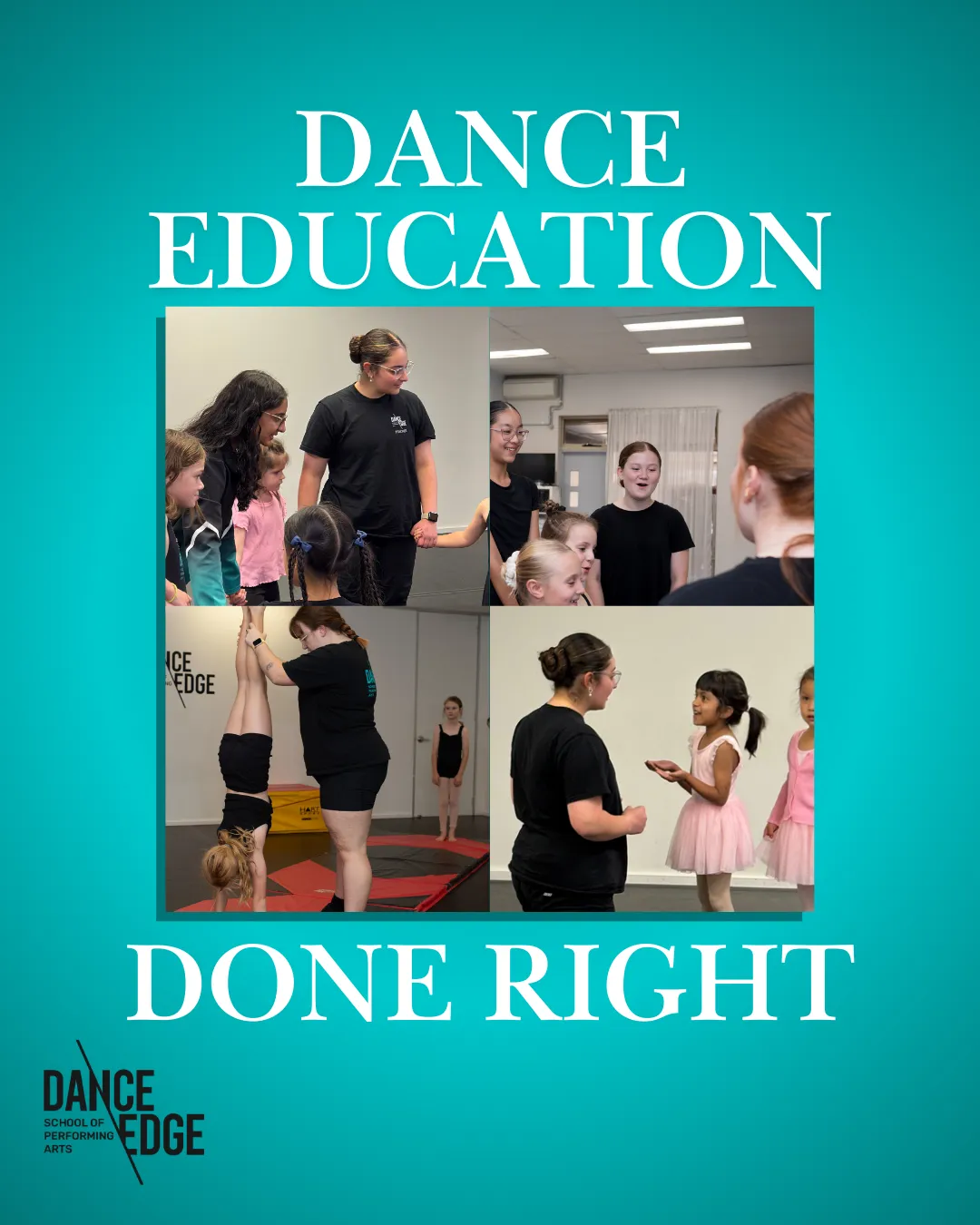
Every member of our teaching faculty holds, at minimum, a Certificate III in Dance Teaching. Many hold Bachelor-level qualifications in dance, education, or the performing arts. All of our educators are Keep Kids Safe in Dance certified- a framework that equips teachers with trauma-informed, child-centred, developmentally appropriate teaching practice.
But qualifications are only part of the picture. The people we choose to teach at Dance Edge are selected for how they show up for children, not just what they know about dance. They are guided by our studio's values every time they walk into a classroom: every child is to be seen, challenged, celebrated, and cherished.
Our Junior Faculty- the emerging teachers who support our senior educators- are mentored carefully before they ever lead a room independently. They don't simply arrive and start teaching. They learn what it means to teach the Dance Edge way.
The result is a teaching culture where corrections are delivered with care, where every child's progress is acknowledged, and where the language of the classroom sounds like encouragement rather than criticism.
If Something Didn't Feel Right, Trust That Feeling
If your child has come home from a dance class feeling small, ashamed, or dreading going back, that's worth paying attention to. Dance should be challenging. It should stretch your child. But it should never make them feel like they aren't enough.
At Dance Edge, our door is genuinely open to any family who has questions about our teaching approach, our qualifications, or our values. We'll always give you a straight answer.
📍 Tuggeranong & Gungahlin | 📞 0499 998 049 | 🌐 danceedge.com.au
Next in the series: "Why Do the Same Kids Always Get the Solos?" — how favouritism happens in dance studios, and how we make sure every child is seen.
Dance Edge School of Performing Arts is a proud member of the Dance Arts Alliance. Studio Principal Renee serves on the DAA Board, advocating for the regulation and elevation of dance education standards across Australia.